
The Law and the Silence: Unpacking Uganda’s Anti-Homosexuality Act
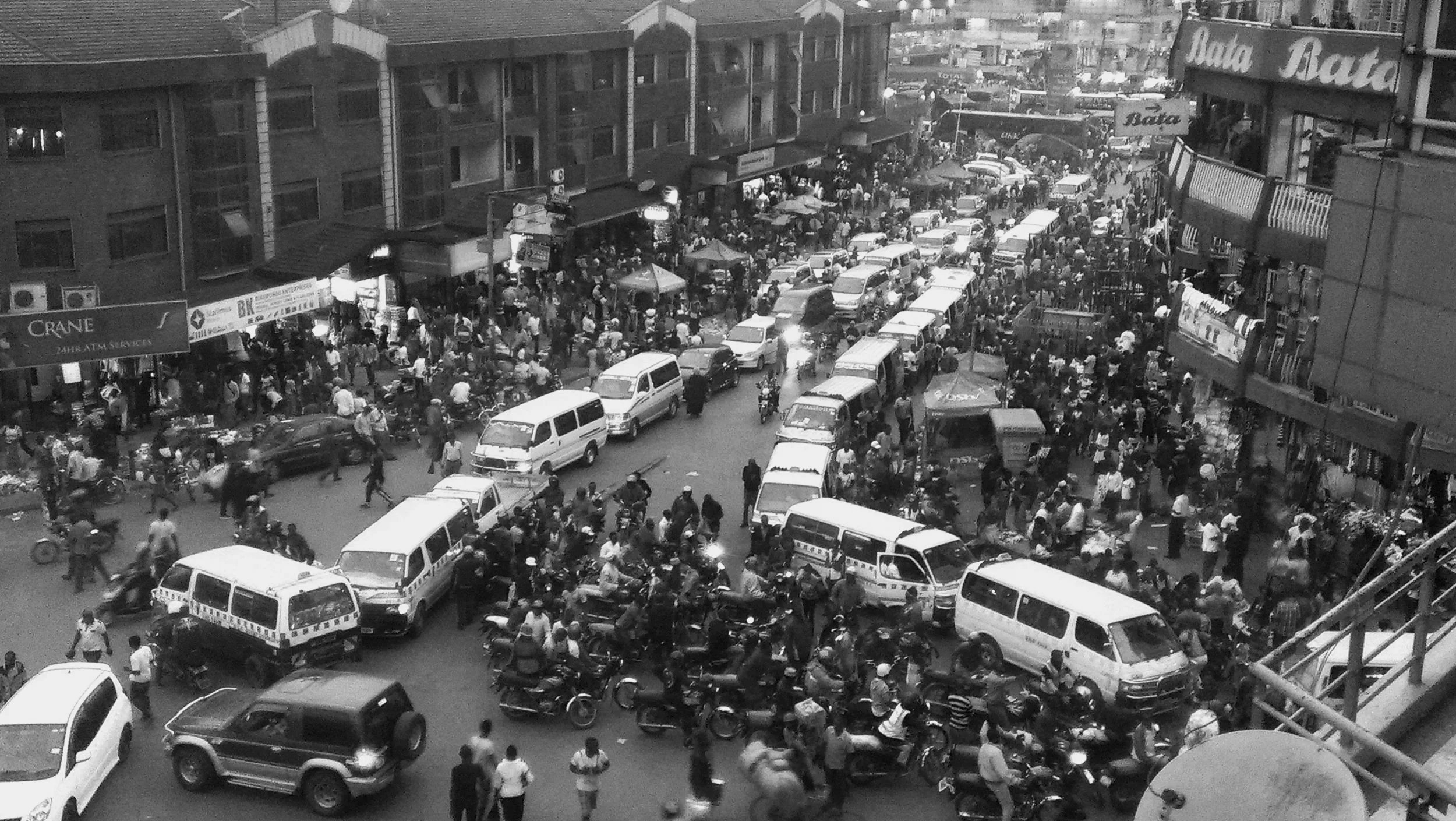
The Law and the Silence: Unpacking Uganda’s Anti-Homosexuality Act
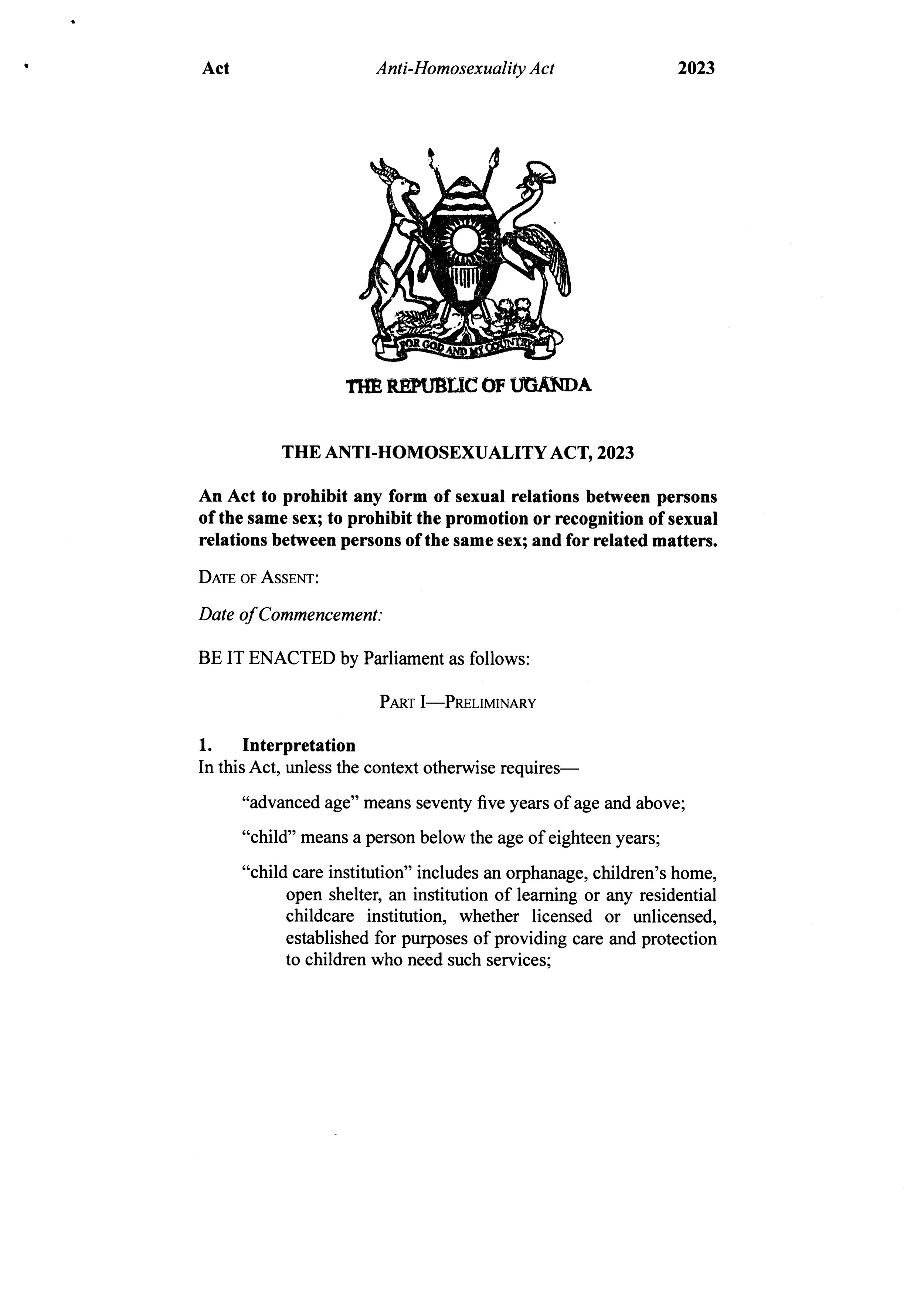
In May 2023, Uganda passed one of the harshest anti-LGBTQ+ laws in the world: The Anti-Homosexuality Act. It criminalizes same-sex relationships with severe penalties, including the death sentence for what is termed “aggravated homosexuality.” For many outside the country, the headlines were shocking. But for those within Uganda and across Africa, the legislation reflected a deeper, older current: the persistence of colonial moral legacies, a struggle over national identity, and the tension between human dignity and state power.
This post seeks not only to explain the law and its implications, but to reflect on what it means to live in a world where queerness can be legislated out of legality and seemingly, out of existence.
Historical Context: Echoes of Empire
Uganda’s legal stance on homosexuality cannot be separated from its colonial past. The original anti-sodomy laws were introduced by British colonial administrators in the Penal Code of 1950, which criminalized “carnal knowledge against the order of nature.” These laws were inherited wholesale upon independence in 1962 and formed the bedrock for Uganda’s modern anti-LGBTQ+ legislation.
In this sense, the Anti-Homosexuality Act is not new, but a more violent reiteration of what has long existed. Yet, it is cloaked in the rhetoric of cultural preservation, framed by lawmakers as a necessary bulwark against “Western immorality.” Ironically, what is framed as a uniquely Ugandan cultural stance is rooted in imported Victorian legal codes.
This contradiction between the colonial roots of homophobia and its contemporary framing as anti-colonial resistance is one of the law’s cruelest ironies.
The Law in Detail
The 2023 Anti-Homosexuality Act expands on previous legislation in several key ways:
“Aggravated homosexuality” (e.g. repeat offenses, cases involving minors or vulnerable persons) is punishable by death.
“Promotion of homosexuality” which includes advocating for LGBTQ+ rights, offering medical or legal services to LGBTQ+ individuals, or even discussing the topic in media or education is criminalized with long prison sentences.
This criminalizes not only sexual orientation but thought, speech, and care. It isolates individuals and dismantles entire ecosystems of support: from NGOs to teachers to doctors.
In April 2024, after petitions and pressure from public health experts, legal scholars, and rights organizations, the Ugandan Constitutional Court struck down four sections of the Anti-Homosexuality Act. On ground of the violation of rights protected under Uganda’s Constitution, particularly the right to health, privacy, housing, and freedom from discrimination, the following sections were removed.
Section 3(2)(c) – "Promotion of homosexuality through funding"
Section 9 – "Duty to report suspected homosexuals within 24 hours"
Section 11(2)(d) – "Eviction of people suspected of homosexuality from their homes"
Section 14 – "Ban on media content that ‘promotes’ homosexuality"
Partially nullified but not entirely invalidated, the remaining majority of the law was upheld.
Public Reaction: A Divided Nation
Public opinion in Uganda is far from monolithic. Yes, many Ugandans supported the bill, seeing it as consistent with religious and cultural values. Christian and Muslim leaders were vocal advocates. Lawmakers spoke of protecting children and families. On the surface, public support appeared overwhelming.
But behind this appearance lies complexity.
Young people, particularly in urban areas, expressed discomfort and fatigue over the law's focus. “I don’t get how this ends up being the focus of politicians when so much of the country is struggling just to get by. It feels like a smokescreen to keep people distracted.” a sentiment shared by many on online discussions and social media platforms like Reddit. Quiet voices from within the medical community (particularly HIV care providers) warned that the law would make it nearly impossible to reach vulnerable populations.
LGBTQ+ Ugandans and their allies, already operating under threat, went further underground. Some fled. Others went silent.
The law has not only criminalized people; it has criminalized the very act of asking if those people have the right to exist.
Implications
Human Rights Watch claimed that this law has unleashed widespread abuse, detailing rights violations enabled by authorities including mass arrests and dehumanizing anal examinations. In 2024, Ugandan LGBTQ+ advocacy organisation Convening for Equality (CFE) published a report detailing the pattern of mob-assisted arrests, forced evictions, beatings, threats, extortion, and “corrective” rape, often carried out by landlords, family members, or local councils, sometimes at the encouragement or acquiescence of security officials.
Global Response and International Humanitarian Law
The international community swiftly condemned the Act. The United Nations, European Union, and multiple human rights organizations called it a grave violation of basic rights. Then-U.S. President Joe Biden referred to the law as “a tragic violation of universal human rights.” The World Bank froze new loans to Uganda. The U.S. imposed visa restrictions on individuals involved in the law’s enforcement.
Under international humanitarian law including the Universal Declaration of Human Rights and the International Covenant on Civil and Political Rights (ICCPR), Uganda is obligated to protect the rights to privacy, freedom of expression, non-discrimination, and the right to life. The Anti-Homosexuality Act violates each of these.
More than that, it stands in stark contrast to growing international recognition of LGBTQ+ rights as human rights. Even in regions where same-sex relationships remain illegal, outright calls for execution and criminalizing advocacy cross a red line.
Still, sovereignty complicates response. Uganda, like any state, defends its right to legislate according to national values. And herein lies the standoff: between international law and domestic autonomy, between the dignity of individuals and the imagined morality of the state.
The Cultural Impact: Visibility as Resistance
What does it mean to be queer in a country where simply existing invites legal punishment? Where seeking community is deemed promotion, and being loved becomes a capital offense?
The psychological toll is immense. LGBTQ+ Ugandans live with an acute sense of hypervisibility and erasure at once: marked as targets yet denied existence. This leads not only to social isolation but also to a collapse of access to essential services: mental health support, HIV care, housing, employment.
And yet, amidst the silence, there is resistance.
Underground networks continue to offer support. Artists, writers, and activists use coded language to tell their stories. Diaspora communities raise awareness and pressure governments. Human rights lawyers continue to file challenges in Ugandan courts.
Visibility becomes a quiet, radical act.
A Meditative Closing: The Role of Witness
What does it mean for the rest of us, those outside Uganda, or those who live in freer societies?
First, it means not looking away. The law may exist in Uganda, but the logic behind it, the idea that queer people are expendable, wrong, unnatural is everywhere. In political speeches, in laws restricting trans healthcare, in jokes and loudly, in silence.
Second, it means supporting the people doing the work: legal advocates, mental health workers, underground shelters, community organizers. These people risk everything to make others feel less alone.
And finally, it means holding space for grief and reflection. The Anti-Homosexuality Act is not just policy. It is a wound that cuts across borders, histories, and lives.
To remember that queerness has always existed in Uganda, across Africa, across time, is to reject the lie that this law tries to enforce.
Queer love, queer joy, and queer survival have always found a way. And they will again.
Comments after review and fact check:
Final note: The entire post, as fact-checked above, is accurate and up-to-date on all major points. Key factual elements – the content of the law (death penalty, etc.), the colonial origin of homophobic laws, the public reaction nuances, the surge of abuses, and the international backlash – are correct and supported by current sources. The only update to mention is the Constitutional Court’s partial nullification of a few provisions (duty to report and others) in 2024 , which the post did not cover. If the blog post is intended to be fully up-to-date, one might add a sentence about that court decision (e.g., noting that as of 2024 the reporting requirement was struck down, though the harshest parts remain). Aside from that, there are no errors or misleading statements found in the text.
Every claim has been cross-verified: from Biden’s quote to the details of the CFE report to the context of colonial laws . The analytical and reflective portions are strongly grounded in factual context and widely shared perspectives. Therefore, the post can be considered factually correct and reliable as an official blog piece, after optionally incorporating the latest legal update for completeness.
Sources:
Uganda’s President Signs Repressive Anti‑LGBT Law (Human Rights Watch):
https://www.hrw.org/news/2023/05/30/ugandas-president-signs-repressive-anti-lgbt-lawAnti‑Homosexuality Act, 2023 (Wikipedia):
https://en.wikipedia.org/wiki/Anti-Homosexuality_Act%2C_2023Uganda’s Constitutional Court Upholds Anti‑Homosexuality Act (Human Rights Watch):
https://www.hrw.org/news/2024/04/04/uganda-court-upholds-anti-homosexuality-act
Rights Abuses & Reports
Uganda’s Anti‑LGBT Climate Unleashes Abuse (Human Rights Watch report, May 2025):
https://www.hrw.org/report/2025/05/26/theyre-putting-our-lives-risk/how-ugandas-anti-lgbt-climate-unleashes-abuseRights violations for Uganda’s LGBTQ community escalating – pressure group (Reuters, June 2024):
https://www.reuters.com/world/africa/rights-violations-ugandas-lgbtq-community-escalating-pressure-group-2024-06-03/
International Response & Sanctions
Statement from President Joe Biden on the Enactment of Uganda’s Anti‑Homosexuality Act (White House, May 29 2023):
https://bidenwhitehouse.archives.gov/briefing-room/statements-releases/2023/05/29/statement-from-president-joe-biden-on-the-enactment-of-ugandas-anti-homosexuality-act/U.S. Fact Sheet: Response to Uganda’s AHA & human rights abuses (White House, December 11 2023):
https://bidenwhitehouse.archives.gov/briefing-room/statements-releases/2023/12/11/fact-sheet-the-united-states-response-to-ugandas-anti-homosexuality-act-and-persistent-human-rights-abuses/
Financial Suspension & World Bank
World Bank Group Statement on Uganda (Loan Suspension) – August 8 2023:
https://www.worldbank.org/en/news/statement/2023/08/08/world-bank-group-statement-on-ugandaWorld Bank Resumes Uganda Funding After Halt Over Anti‑LGBT Law (Reuters, June 5 2025):
https://www.reuters.com/sustainability/society-equity/world-bank-resume-uganda-funding-after-halt-over-anti-lgbt-law-2025-06-05/
Public Reaction, Diaspora & High Court Ruling
Activists in Uganda Finalise Appeal to Overturn Draconian Anti‑Gay Law (The Guardian, December 11 2023):
https://www.theguardian.com/global-development/2023/dec/11/activists-in-uganda-finalise-appeal-against-draconian-anti-gay-lawUganda’s Anti‑Gay Law Causing Wave of Rights Abuses, Activists Say (Reuters, Sept 28 2023):
https://www.reuters.com/world/africa/ugandas-anti-gay-law-causing-wave-rights-abuses-activists-say-2023-09-28/
Civil Society Report (Convening for Equality)
Rights violations for Uganda’s LGBTQ community escalating – pressure group (Reuters, summarizes CFE findings, see link above)
Additionally, reports on Convening for Equality and their documented cases were referenced via Reuters and HRW summaries (linked above).
